Do Eco Settings on Appliances Actually Save Energy?
That “eco” button sounded like a good idea until the dishwasher started running half the night, and the laundry still came out damp. You keep staring at the electric bill, wondering how something labeled energy saving somehow turned into more noise, more waiting, and zero relief on costs. A lot of Florida homeowners end up here after months of daily inconvenience, questioning whether eco settings actually help or make life harder.
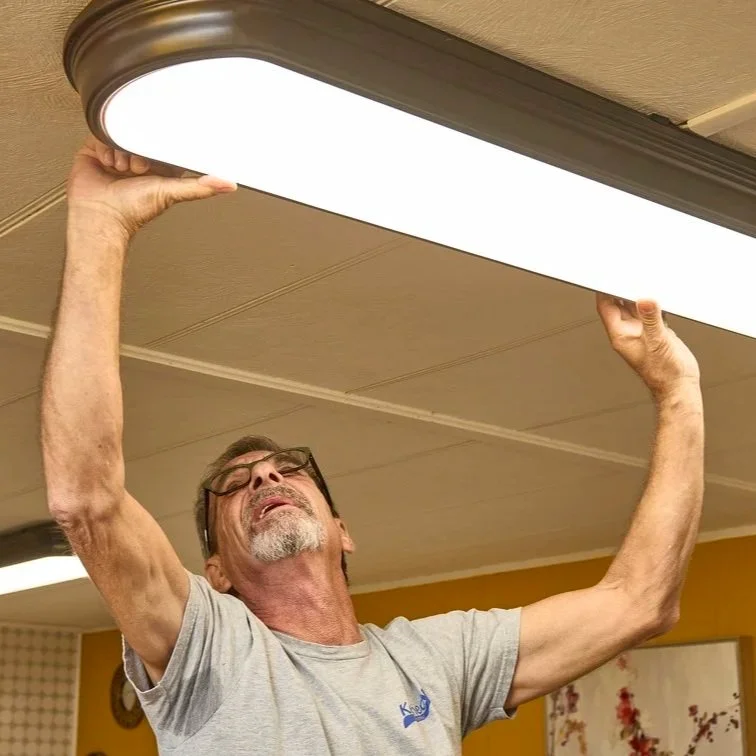
Electrician installing ceiling light while homeowners learn how eco appliance settings affect energy usage, cycle length, and electrical demand patterns.
Why Homeowners Start Questioning Eco Modes At All
Most people do not search 'do eco settings on appliances actually save energy' because they love reading appliance manuals. The question usually comes after frustration sets in. Cycles take longer, appliances behave differently, and results feel inconsistent. A refrigerator hums longer than before, a dryer needs extra runs, or the washing machine leaves clothes feeling half done. Homeowners start wondering if the promised savings are real or just marketing language slapped on a button.
In Florida, that frustration is amplified by climate realities. Appliances already work harder because of heat and humidity. When eco settings stretch run times or reduce output to save power, homeowners feel the impact immediately. Longer cycles mean more ambient noise, delayed routines, and sometimes higher energy use when cycles repeat. The confusion grows because the appliance technically uses less power per minute, yet the bill does not reflect meaningful savings.
What Eco Settings Are Actually Designed To Do
Eco settings focus on reducing peak energy use rather than delivering fast results. Lower water temperatures, slower motor speeds, reduced heating elements, and extended cycle times all aim to limit energy draw at any single moment. That design works well in controlled testing environments where conditions stay predictable, and usage remains consistent.
Homeowners often misunderstand eco modes because they expect the same performance at a lower cost. Instead, eco settings trade time and sometimes effectiveness for reduced energy intensity. In real homes, especially busy Florida households, that tradeoff does not always play out favorably. Longer run times can offset lower power usage, particularly when cycles need to be repeated to achieve acceptable results.
The Common Mistake Of Treating Eco As A Default Setting
A frequent homeowner mistake involves leaving eco mode on permanently. People assume energy-saving features should always be active, as with car fuel-efficiency modes. Appliances, however, operate differently. Eco settings are situational tools, not universal solutions.
Using eco mode for every load, every season, and every appliance ignores real-world conditions. Heavy laundry loads, humid environments, and frequent use push appliances beyond what eco settings handle efficiently. Over time, homeowners notice rising frustration and unchanged utility bills. The mistake lies in assuming one setting fits all scenarios when appliance design rarely supports that assumption.
Why Eco Settings Behave Differently In Florida Homes
Florida conditions challenge eco modes in ways many homeowners never consider. High humidity affects drying efficiency. Warm ambient temperatures force refrigerators and freezers to run longer. Dishwashers face harder water issues in some areas, reducing cleaning effectiveness at lower temperatures.
Eco settings lower energy input, but cannot change environmental conditions. As a result, appliances compensate by running longer. That extended operation increases wear on motors, fans, and control boards. Homeowners searching for 'do eco settings on appliances actually save energy' often do so after noticing appliances running more frequently rather than less.
Do Eco Settings Always Reduce Your Electric Bill?
Eco settings reduce energy use per cycle segment, not necessarily per completed task. A dryer that uses less heat but needs two cycles consumes more energy overall. A dishwasher that runs longer overnight might overlap with higher-demand periods, depending on household usage patterns.
Electric bills reflect total consumption, not theoretical efficiency. Homeowners feel misled when eco mode promises savings but delivers inconvenience. The disconnect stems from a misunderstanding of how appliances balance power draw, time, and performance. In some cases, standard modes complete tasks faster and more efficiently when environmental factors are considered.
How Appliance Age Changes The Equation
Eco settings work best on newer appliances designed with advanced sensors and variable speed motors. Older models often lack the precision needed to adapt effectively. Eco modes on aging appliances can cause more harm than good by forcing components to operate longer under strain.
Florida homeowners with older appliances may notice that eco settings trigger unusual behavior, such as incomplete cycles or frequent restarts. Those issues increase energy consumption and stress electrical components. Appliance age matters because eco modes rely on assumptions about efficiency that older designs cannot meet reliably.
The Hidden Wear And Tear Of Longer Cycles
Extended run times increase mechanical wear. Motors, belts, fans, and control boards experience more operating hours when eco modes stretch cycles. Homeowners rarely associate energy-saving settings with increased maintenance needs, but the relationship exists.
Over time, that added wear can shorten the appliance's lifespan. Repairs become more frequent, offsetting any minor energy savings. Electricians often see appliances failing earlier because eco modes push components beyond intended duty cycles. The homeowner thought they were saving money while unknowingly accelerating wear.
When Eco Settings Actually Make Sense
Eco settings shine in specific scenarios. Light loads, mild weather, and flexible schedules allow appliances to operate efficiently without repeating cycles. In those conditions, reduced energy draw translates into genuine savings without frustration.
Using eco mode selectively aligns better with how appliances function. Understanding when eco settings work prevents disappointment. Homeowners who treat eco as an occasional tool rather than a permanent default often report better results and fewer complaints about performance.
Why Marketing Language Confuses The Issue
Appliance labels focus on efficiency ratings that reflect controlled testing environments. Real-world usage rarely matches those conditions. Homeowners assume eco settings deliver guaranteed savings regardless of lifestyle or location.
That assumption leads to frustration when results vary. Marketing highlights potential, not certainty. Electricians frequently explain that eco modes reduce theoretical consumption but cannot account for household habits, climate, or appliance condition. Understanding that gap helps homeowners set realistic expectations.
How Eco Settings Impact Your Electrical System
Longer appliance run times affect household electrical systems. Circuits stay loaded for extended periods, panels experience sustained demand, and heat buildup increases. In Florida homes where air conditioning already strains electrical capacity, eco settings can contribute to higher baseline loads.
Extended operation does not necessarily overload circuits, but it increases cumulative stress. Electricians observe more nuisance breaker trips and voltage fluctuations when appliances operate longer than intended. The eco setting itself does not damage systems, but the resulting usage patterns can expose underlying electrical weaknesses.
The Shortcut Of Ignoring Real Usage Patterns
A common shortcut is to rely on eco modes rather than adjust habits. Homeowners leave appliances running half full, stack heavy loads into eco cycles, or run multiple eco appliances simultaneously. Those habits negate intended savings.
Correct practice involves matching settings to their intended use. Eco modes work best with deliberate planning, not convenience-driven behavior. Ignoring usage patterns turns eco features into sources of annoyance rather than benefit.
Timing Matters More Than The Setting
Energy savings depend heavily on when appliances run. Eco modes running during peak demand hours may save less than standard modes used during off-peak times. Florida utility rate structures vary, but timing often influences cost more than cycle efficiency.
Homeowners focused solely on eco buttons miss the bigger picture. Electricians frequently point out that strategic usage patterns outperform blanket eco settings. Understanding timing adds clarity to why bills sometimes fail to drop despite eco usage.
Why Some Appliances Show Savings And Others Do Not
Not all appliances respond equally to eco modes. Refrigerators benefit from variable compressors. Washing machines handle light loads well. Dryers struggle in humid climates. Dishwashers vary based on water quality and loading habits.
Expecting uniform results across all appliances leads to disappointment. Homeowners searching 'do eco settings on appliances actually save energy' often experience mixed outcomes because each appliance interacts differently with the environment and usage.
What Electricians See In Real Homes
Electricians evaluate energy use holistically. At Kennedy Electric, homeowners often learn that eco settings played a minor role compared to appliance condition, wiring efficiency, and household habits. Appliances running longer expose marginal circuits and aging components.
Those evaluations help homeowners understand why eco modes alone rarely solve high energy bills. Addressing electrical efficiency requires looking beyond buttons and labels toward real-world behavior and system health.
FAQs
Eco settings lower power draw per unit of time, but longer cycles can offset that benefit. Total energy use depends on whether tasks finish in one cycle or require repeats.
Eco mode works best selectively. Permanent use often leads to longer run times and frustration, especially in humid environments like Florida.
Longer operating hours increase mechanical wear. Over time, that can lead to more repairs and reduced appliance lifespan.
Lower heat settings struggle in humid conditions. Clothes may require additional cycles, increasing total energy use.
Newer appliances handle eco modes more effectively due to advanced sensors and variable components. Older models often struggle to adapt efficiently.
