50 Electrical Terms Every Homeowner Should Know
Why does the breaker keep tripping every time the microwave and the air fryer run together, and why does nobody explain it in plain English? Florida homes are full of electrical quirks that feel like personal attacks, especially when lights flicker, outlets feel warm, or half the house goes dead for no obvious reason.
Living with electrical confusion usually starts as a mild annoyance and turns into daily frustration faster than most homeowners expect. One minute, someone is Googling a weird buzzing sound near the panel, and the next minute, they are worried about safety, rising bills, or whether something behind the walls is slowly getting worse. Many Florida homeowners put off learning basic electrical language because it feels technical or intimidating, but not knowing the terms often leads to misunderstandings, delayed repairs, and problems that quietly grow over time. Electricians see it constantly in real homes, where the issue becomes obvious once the right words are on the table.
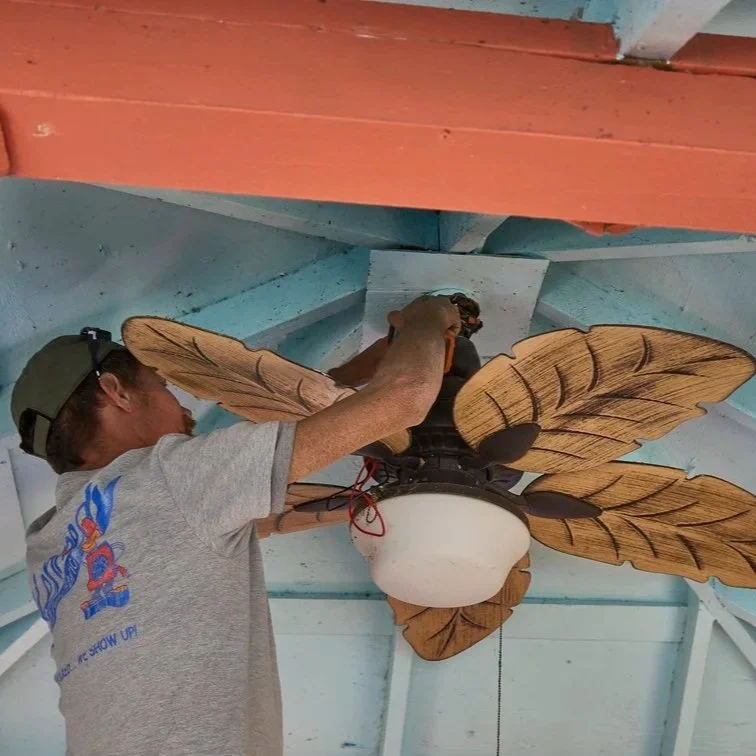
Electrician installing outdoor ceiling fan wiring under patio roof to improve airflow, comfort, and electrical efficiency in residential space.
Why Homeowners Keep Hearing Electrical Terms That Nobody Explains
Electrical conversations tend to sound like a foreign language to homeowners because the industry uses shorthand developed for speed rather than clarity. Electricians talk to each other all day using terms like load, grounding, amperage, and fault, then accidentally carry that same language into homeowner conversations. The result is a lot of polite nodding while someone secretly feels lost and hesitant to ask questions. That hesitation matters because misunderstandings often lead homeowners to approve the wrong work, delay important upgrades, or assume a problem is smaller than it really is.
In Florida, confusion about electrical terminology is amplified by heat, humidity, and aging housing stock. Older panels, aluminum wiring, and additions from decades ago often mix with newer appliances that draw more power than the system was designed to handle. When a homeowner hears a term like 'dedicated circuit' or 'service upgrade' without understanding it, the natural reaction is to postpone decisions. Over time, postponed decisions turn into overloaded circuits, frequent breaker trips, and unnecessary wear that shows up during the hottest months when electrical systems are already under stress.
Understanding Circuits Before They Start Acting Up
A circuit is the path electricity follows from the panel to outlets, switches, and appliances, then back again. Homeowners often assume a circuit means one room or one device, but circuits frequently serve multiple outlets or areas. That misunderstanding explains why a breaker trips when two unrelated things run at the same time. Someone might think the garage outlet has nothing to do with the kitchen, only to discover they share the same circuit.
Another commonly misunderstood term is circuit breaker. A breaker is a safety device that shuts off power when a circuit draws more current than it can safely handle. Breakers trip to prevent overheating and fire risk, not because they are defective. When breakers trip repeatedly, resetting them without understanding the cause becomes a habit that hides deeper issues. Florida electricians regularly see melted insulation or damaged connections caused by years of ignoring what a tripping breaker was trying to say.
Load, Amperage, And Why Power Feels Limited
Electrical load refers to the amount of electricity devices draw from a circuit. Amperage measures the amount of electrical current flowing. Homeowners often hear these terms when someone says a circuit is overloaded, which can feel vague or dismissive. In reality, load calculations matter because every wire and breaker has limits based on amperage ratings.
Many Florida homes struggle with load issues because modern appliances draw more power than older systems were designed to handle. Hair dryers, air fryers, portable AC units, and electric vehicle chargers strain circuits sized decades ago. When someone hears that a circuit cannot handle the load, it means the wires may heat up over time, connections may loosen, and breakers may trip more often. Ignoring load conversations usually leads to nuisance outages first and safety concerns later.
Grounding And Bonding Are Not The Same Thing
Grounding is one of the most misunderstood electrical terms homeowners hear. Grounding provides a safe path for excess electricity to travel into the earth during a fault. Bonding connects metal components so they share the same electrical potential. Homeowners often assume both words mean the same protective function, but each serves a different role in safety.
Improper grounding is common in older Florida homes, especially those built before modern electrical codes. Electricians often discover missing ground wires, bootleg grounds, or outdated bonding methods during panel inspections. When grounding and bonding are misunderstood or ignored, electrical faults may not clear properly, increasing shock risk and equipment damage. Problems usually remain invisible until something fails or someone gets a jolt from a metal surface.
Panels, Subpanels, And Why Space Matters
The electrical panel is the central distribution point for electricity in a home. A subpanel is a secondary panel that extends capacity to another area, such as a garage or an addition. Homeowners frequently assume panel size refers only to physical space, not electrical capacity. Panel ratings actually determine how much power the home can safely use at one time.
Florida electricians regularly encounter panels that are physically full but electrically maxed out. Homeowners sometimes hear that a panel is out of space and assume it is a minor inconvenience. In reality, crowded panels often lead to double-tapped breakers, improper connections, and heat buildup. These shortcuts may work temporarily, but tend to fail under Florida summer demand when air conditioning systems run nonstop.
Dedicated Circuits And The Myth Of One Plug Equals One Circuit
A dedicated circuit serves a single appliance or device, such as a refrigerator, microwave, or HVAC component. Homeowners often assume plugging something into its own outlet means it has a dedicated circuit. In many homes, multiple outlets share the same circuit behind the scenes, regardless of physical distance.
Misunderstanding dedicated circuits leads to overloaded wiring and unexpected outages. Florida kitchens and laundry rooms often exhibit this issue, especially in homes remodeled without proper electrical planning. When appliances share circuits they were never meant to share, performance suffers, and wear accelerates. Dedicated circuits exist to protect equipment and wiring over time, not to complicate installations.
GFCI And AFCI Protection Explained Without The Jargon
A GFCI, or ground fault circuit interrupter, shuts off power when it detects electricity flowing where it should not, such as through water or a person. AFCI, or arc fault circuit interrupter, detects dangerous arcing conditions that can start fires. Homeowners often confuse these devices or assume they only matter in bathrooms and kitchens.
Florida building codes require GFCI protection in areas with moisture exposure and AFCI protection in many living spaces. These devices sometimes trip unexpectedly, leading homeowners to replace them or bypass the protection rather than investigate the cause. Frequent trips often indicate wiring issues, appliance faults, or moisture intrusion. Ignoring the reason behind the trip usually means the underlying hazard remains active.
Voltage, Resistance, And Why Lights Flicker
Voltage is the pressure pushing electricity through a circuit, while resistance is anything that slows the flow. Flickering lights, dimming when appliances start, or buzzing sounds often point to voltage drops or increased resistance. Homeowners commonly blame the utility company, but many issues originate inside the home.
Loose connections, aging wiring, and corroded terminals create resistance that worsens over time. Florida humidity accelerates corrosion inside panels and junction boxes. When resistance increases, heat builds up at connection points, sometimes silently. Flickering lights often appear long before visible damage, making them an early warning sign rather than a harmless annoyance.
Service Size, Meter Bases, And Power Coming Into The House
Electrical service size refers to the amount of electricity a utility supplies to a home. Many Florida homes still use service sizes that were adequate decades ago but struggle to meet modern demands. Homeowners hear terms like service upgrade or meter base replacement and assume it is optional or cosmetic.
Service limitations show up as frequent breaker trips, voltage drops, or an inability to add new appliances. Meter bases also age, and corrosion or loose connections there affect the entire home. Problems at the service level impact every circuit downstream. Ignoring service conversations often leads to repeated small issues instead of addressing the root cause once.
Conduit, Romex, And What Protects Wires
Conduit is a protective tubing that houses electrical wires, while Romex is a common type of non-metallic sheathed cable used inside walls. Homeowners sometimes assume all wiring looks the same or serves the same purpose. Florida installations often mix conduit and cable, depending on location and age.
Improper wiring methods cause problems when exposed to moisture, heat, or physical damage. Outdoor wiring and garage installations often show signs of wear when the wrong materials are used. Understanding basic wiring types helps homeowners recognize when shortcuts were taken and why certain areas experience repeated electrical issues.
Permits, Inspections, And Why They Exist
Permits and inspections are often viewed as bureaucratic obstacles rather than safety measures. Homeowners may hear electricians mention permits and assume it is about paperwork rather than protection. Permits trigger inspections to verify that the work meets current safety standards.
Unpermitted electrical work is common in older Florida neighborhoods. Problems surface years later when selling a home, filing insurance claims, or troubleshooting mysterious electrical behavior. Inspections catch issues like improper grounding, undersized wiring, and unsafe connections before they cause damage. Skipping permits usually saves time upfront, but costs more when problems eventually surface.
Surge Protection And Florida Storm Reality
Surge protectors shield electrical systems from voltage spikes caused by lightning, utility switching, or equipment cycling. Florida experiences frequent storms, making surge protection especially relevant. Many homeowners rely solely on plug-in strips, assuming whole-home protection is unnecessary.
Whole-home surge protection installs at the panel and defends all circuits simultaneously. Without it, repeated small surges slowly degrade electronics and appliances. Damage accumulates invisibly until devices fail earlier than expected. Surge protection conversations often happen after losses, even though prevention is simpler than replacement.
Common Electrical Shortcuts That Cause Long-Term Headaches
Homeowners often assume previous work was done correctly because it functioned for years. Electricians regularly find shortcuts like backstabbed outlets, double-lugged breakers, and undersized wiring that technically worked but aged poorly. These shortcuts save time during installation but create weak points.
Florida heat and humidity accelerate deterioration at weak connections. Problems rarely fail all at once. Instead, homeowners notice subtle signs like warm outlets, intermittent power, or unexplained trips. Understanding the language behind these issues helps homeowners recognize when something feels off rather than dismissing it as normal aging.
FAQs
A breaker that trips repeatedly indicates the circuit is drawing more power than it can safely handle or experiencing a fault. Resetting it without addressing the cause allows heat and wear to continue building inside the wiring.
Warm outlets usually signal loose connections, high resistance, or overloaded circuits. Heat should never be ignored because it often appears before visible damage or failure occurs.
Grounding provides a safe path for excess electricity during faults, while surge protection limits voltage spikes entering the system. Both work together but serve different safety purposes.
Many older homes operate safely but struggle to meet modern electrical demands. Upgrades become necessary when systems show signs of overload, frequent trips, or limited capacity for new appliances.
Occasional flickers during storms may be normal, but frequent or consistent flickering suggests loose connections or voltage issues. Investigating early helps prevent damage and frustration later.
Kennedy Electric often explains these terms during real service calls because clarity helps homeowners make better decisions and avoid long-term electrical headaches in Florida homes.