Common Summer Electrical Problems in Florida (and How to Fix Them)
Why does everything electrical in the house start acting strange the moment summer settles in? The AC kicks on, and the lights dip; a breaker trips out of nowhere, and suddenly, outlets that never crossed your mind feel warm when you brush past them.
That moment usually hits after walking inside from Florida heat, cranking the thermostat down, and realizing the house feels like it is fighting itself to stay comfortable. What starts as a small annoyance often turns into daily frustration, higher energy bills, and the nagging worry that something bigger is going on behind the walls.
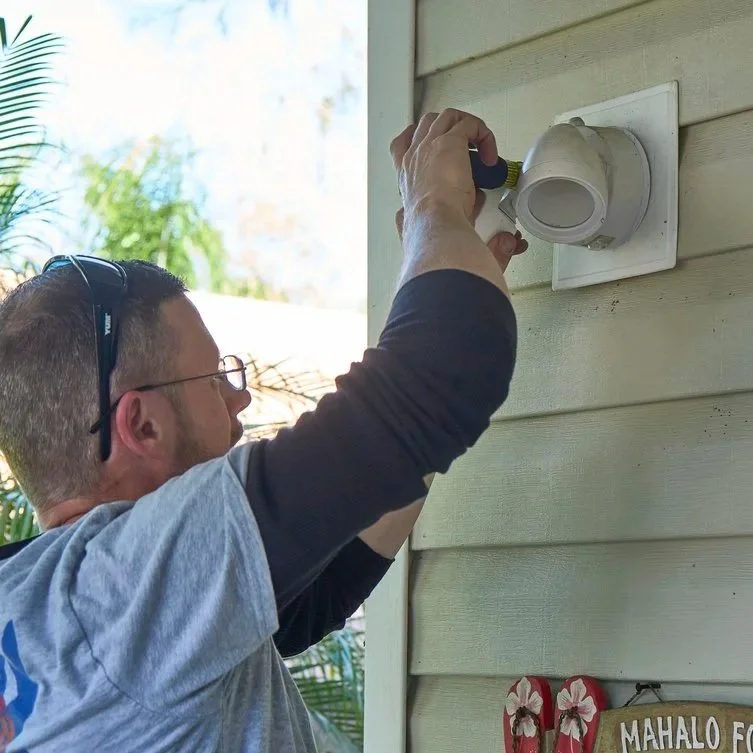
Electrician installing exterior lighting illustrates how summer heat, humidity, and outdoor electrical demand expose hidden residential wiring problems.
Why Florida Summers Expose Electrical Problems You Never Noticed Before
Florida summers put electrical systems under pressure in a way few other seasons can. High temperatures, constant humidity, and long daily run times for air conditioners, pool equipment, and household electronics combine into nonstop demand. Systems that behave quietly through spring suddenly start showing signs of strain once summer usage becomes the norm rather than the exception. Homeowners often notice the symptoms before they understand the cause, especially when problems appear only during the hottest part of the day.
Many Florida homes were wired during a time when electrical usage looked very different. Air conditioners were smaller, fewer devices ran continuously, and households did not rely on dozens of chargers, smart devices, and work-from-home equipment. Summer exposes the gap between modern electrical demand and older infrastructure. Wiring that once handled intermittent loads now carries steady current for hours at a time, causing heat buildup that reveals loose connections, aging components, and circuits operating closer to their limits than homeowners realize.
Humidity adds another layer to the problem. Moist air accelerates corrosion inside electrical panels, outlets, and junction boxes, particularly in garages, exterior walls, and utility spaces. Corrosion increases resistance, resistance creates heat, and heat leads to flickering lights, nuisance breaker trips, or component failure. Summer does not create these issues overnight. It simply pushes systems far enough that hidden weaknesses become impossible to ignore.
Why Breakers Keep Tripping When the Air Conditioner Turns On
Why does my breaker trip when the AC kicks on is one of the most common summer electrical complaints across Florida. Homeowners often assume the air conditioner itself is failing or that the breaker is doing its job by shutting things down. While protection matters, repeated trips point to an underlying electrical issue rather than normal operation.
Air conditioners draw a heavy surge of power every time the compressor starts. Older breakers, worn panel components, or undersized circuits struggle with that sudden demand. Over time, breakers weaken and begin tripping below their intended thresholds, especially after years of heat exposure. What feels random is usually the result of components no longer performing as designed.
A common homeowner response is to reset the breaker and avoid running other appliances at the same time. That workaround keeps the house running but hides the real issue. Repeated resets stress the breaker and panel connections, increasing internal heat and wear. Eventually, the breaker may fail to trip when it should, or damage may spread to wiring inside the panel. Addressing the cause early typically means correcting load issues or replacing failing components rather than dealing with emergency panel repairs later.
Why Lights Flicker Every Time Something Big Turns On
Why do my lights flicker when the AC turns on is another search homeowners make every summer. Flickering lights feel minor until they happen repeatedly, especially when they coincide with large appliances cycling on and off. Many homeowners blame the power company or assume storms are causing brief fluctuations.
While utility issues happen, persistent flickering usually starts inside the home. Loose connections at the panel, meter base, or individual circuits cause voltage drops when heavy loads are activated. Heat causes metal components to expand, and years of expansion and contraction gradually loosen connections that once seemed solid. When resistance increases at those points, the lights dim or flicker instantly.
Flickering lights are more than an annoyance. Loose connections generate heat, and heat accelerates deterioration. Over time, that combination raises fire risk inside panels and junction boxes where damage remains hidden. Waiting until flickering becomes constant often means repairs involve replacing damaged components instead of tightening or correcting connections that failed slowly over the years of use.
Why Outlets and Switches Feel Warm During Heat Waves
Warm outlets and switches are one of the most misunderstood summer electrical problems. Florida homeowners often chalk it up to hot weather, especially in rooms exposed to direct sunlight. Feeling heat at an electrical device, however, is never normal and should not be ignored.
Warmth usually indicates resistance caused by loose wiring, overloaded circuits, or worn internal contacts. Summer increases the use of window units, fans, dehumidifiers, and portable cooling devices that draw steady power from outlets not designed for continuous high loads. Over time, those connections degrade, increasing resistance and surface temperature.
Ignoring warm outlets risks melted insulation, damaged receptacles, or arcing behind the wall. Many homeowners do not notice a problem until discoloration or a burning smell appears, which means damage is already significant. Early inspection often involves redistributing loads or correcting wiring issues rather than opening walls or replacing extensive sections of cable.
The Hidden Problem With Adding Just One More Device
Why does my circuit feel overloaded all of a sudden is another summer question that catches homeowners off guard. The issue rarely comes from a single new device. It develops gradually as households add equipment without considering cumulative demand.
A garage circuit picks up a freezer, then a spare refrigerator, then charging equipment. A bedroom circuit becomes a home office with computers, monitors, printers, and cooling devices. Each addition feels small, but summer turns intermittent use into a constant load. Circuits heat up for hours instead of minutes, exposing weaknesses that remain hidden during cooler months.
Many homeowners trust breakers to protect against all damage. Breakers protect against sudden overloads, but they do not prevent gradual heat damage that occurs below trip thresholds. Wiring insulation dries out, connections loosen, and outlets degrade quietly. When failure finally occurs, it often feels sudden even though damage developed slowly over years of incremental use.
Why Electrical Panels Struggle More In Florida Heat
Electrical panels in Florida face harsher conditions than many homeowners realize. Heat, humidity, and in some areas salt air contribute to accelerated aging. Panels installed decades ago were not designed for modern loads or environmental exposure and often operate well past their ideal lifespan.
Corrosion inside panels interferes with breaker performance and bus bar contact. Breakers may trip unpredictably or fail to trip when needed. Homeowners sometimes replace individual breakers repeatedly without realizing the panel itself is deteriorating. Summer demand pushes every component closer to its limit, revealing issues that remain less obvious during winter months.
A panel that functions marginally during cooler seasons may struggle dangerously during peak summer demand. Addressing panel condition early stabilizes the entire system and reduces the risk of cascading failures that affect multiple circuits, appliances, and household routines.
Why Power Surges Feel Worse During Summer Storm Season
Why do electronics fail more often in summer is a question many Florida homeowners ask after a storm-filled season. Summer brings frequent thunderstorms, lightning, and brief outages that send surges through electrical systems. Surges are not limited to dramatic lightning strikes. Smaller fluctuations occur constantly during storm activity.
Without proper surge protection, repeated surges degrade sensitive electronics, HVAC controls, and appliance components. Damage may not show up immediately, which makes the cause harder to identify later. Summer compounds the problem because systems operate at higher loads, increasing vulnerability during voltage fluctuations.
Whole home surge protection reduces cumulative damage and protects equipment during both major storms and everyday fluctuations. Many homeowners only consider surge protection after replacing expensive appliances, unaware of the damage that has accumulated over multiple seasons.
Why Summer Electrical Problems Do Not Go Away On Their Own
Electrical issues that surface during summer rarely disappear when temperatures drop. Heat exposes weaknesses, but damage persists year-round. Loose connections remain loose. Heat-damaged insulation does not recover. Corrosion does not reverse.
Homeowners who delay repairs often face more complex problems later. A flickering light becomes a dead circuit. A warm outlet turns into a burned receptacle. A nuisance breaker trip leads to panel damage that affects multiple rooms. Summer problems are warnings rather than inconveniences.
Addressing issues when they first appear reduces long-term disruption, prevents higher repair costs, and keeps systems stable during the months when demand is highest. Florida summers reveal the true condition of electrical systems.
How Common Summer Electrical Problems Are Typically Fixed
Most summer electrical problems are manageable when addressed early. Solutions vary based on the issue, but they often involve correcting load distribution, repairing connections, or updating aging components rather than full system replacement.
Breaker issues may require replacing weakened breakers, upgrading circuits serving high-demand equipment, or correcting panel deficiencies. Flickering lights often stem from loose connections that need tightening or replacement before damage spreads. Warm outlets usually indicate wiring issues or overloaded circuits, which can be corrected by redistributing the load or replacing components.
Older panels benefit from evaluation rather than piecemeal fixes. In many Florida homes, panel upgrades improve reliability, safety, and capacity without ongoing nuisance issues. Surge protection reduces long-term equipment wear during storm season.
Kennedy Electric frequently sees homeowners surprised by how manageable repairs are when problems are caught early. The most costly situations usually involve months or years of ignored warning signs rather than sudden failures.
FAQs
Summer increases electrical demand and heat, which pushes systems closer to their limits. Problems that persist year-round become noticeable when air conditioners, fans, and appliances run continuously for long periods.
Repeatedly resetting a breaker without addressing the underlying issue can damage the breaker and the panel over time. Frequent trips usually signal an underlying issue that needs inspection.
Outlets should not feel warm. Heat indicates resistance from loose wiring, overloads, or worn components and should be addressed promptly.
Older homes often have wiring and panels designed for lower electrical demand. Summer usage exposes limitations that were not noticeable decades ago.
Small surges occur during storms and outages even without direct strikes. Over time, repeated surges damage electronics and appliances, especially during high-demand summer months.
