Can Faulty Appliances Damage Your Electrical System?
That breaker did not trip for no reason, and it is probably not just a “bad outlet.” You keep resetting it, and the microwave sounds a little angrier each week. Now, half the kitchen goes dark at random times, turning normal routines into daily frustration. Plenty of Florida homeowners end up right here, annoyed and uneasy, wondering if one stubborn appliance is quietly messing with the rest of the house.
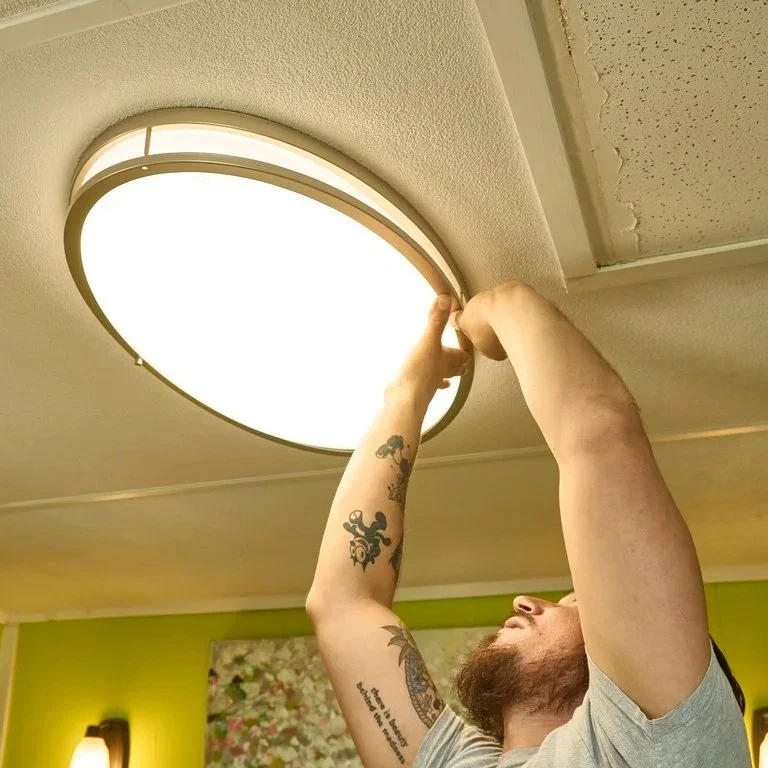
Electrician installing ceiling light while discussing how faulty appliances create electrical stress that affects wiring, breakers, and long-term home safety.
Why Homeowners Start Asking If Appliances Can Harm Their Wiring
Most people do not immediately connect a misbehaving appliance to a larger electrical problem. The usual assumption is that appliances fail on their own and house wiring fails separately. That mental separation makes sense until strange patterns start showing up. Lights dim when the dryer kicks on, outlets feel warm, or breakers trip only when one specific appliance runs. Those moments feel unsettling because they interrupt daily life and hint that something deeper might be wrong behind the walls.
In Florida, those warning signs tend to appear sooner because electrical systems work harder year-round. Air conditioning loads stay high, humidity affects connections, and older panels often run closer to their limits. When a faulty appliance draws power unevenly or creates internal shorts, it does not just suffer alone. It pushes stress back into circuits, breakers, and wiring that were never meant to absorb that kind of abuse. Over time, the inconvenience turns into a real risk that homeowners often underestimate.
What “Faulty” Actually Means In Electrical Terms
When homeowners hear the phrase faulty appliance, many picture something completely broken that will not turn on. In reality, the most damaging appliances are often the ones that still work, just poorly. Faulty can mean worn internal wiring, failing motors, damaged heating elements, or control boards that mismanage current flow. Those issues do not always stop the operation, but they change how electricity moves through the appliance and back into the home.
That misunderstanding matters because appliances connect directly to household circuits. When internal components start pulling irregular current, generating heat, or short cycling, the electrical system feels it immediately. Breakers may trip intermittently, wires may heat up beyond normal levels, and outlets may experience repeated stress. Homeowners often chase surface symptoms, replacing breakers or blaming the panel, without realizing the appliance itself is the source of the strain.
Can a Faulty Appliance Really Damage Your Electrical System?
Homeowners frequently search for faulty appliances that can damage their electrical system, even though the idea sounds extreme at first. The reality is that damage rarely occurs all at once. Electrical systems degrade gradually under repeated stress. A faulty appliance can overload a circuit repeatedly, weaken breaker mechanisms, and accelerate insulation breakdown in wiring. Over months or years, that ongoing abuse creates vulnerabilities that did not exist before.
In Florida, where heat already pushes electrical components to the limit, that added stress compounds more quickly. Wiring insulation dries out more quickly, breakers lose sensitivity, and connections loosen under thermal expansion. What started as an annoying appliance issue quietly becomes a system-wide problem that affects reliability and safety. By the time homeowners realize the connection, repairs often extend beyond the original appliance.
The Common Homeowner Mistake Of Blaming The House First
One of the most common mistakes electricians see involves blaming the electrical system before questioning the appliance. Homeowners replace breakers, swap outlets, or even consider panel upgrades while continuing to use the same problematic appliance. That approach feels logical because the symptoms appear in the house, not inside the appliance, where problems remain hidden.
The problem with that assumption is that it treats the effect rather than the cause. If a faulty appliance continues feeding unstable current into a circuit, new breakers and outlets still absorb that stress. Over time, repeated tripping weakens breaker springs, outlets lose tension, and wiring connections degrade. The appliance remains the silent troublemaker while homeowners spend money chasing solutions that never fully stick.
How Faulty Appliances Stress Breakers And Panels
Breakers exist to protect wiring, not appliances. When a faulty appliance draws excessive or uneven current, breakers trip to prevent overheating. Occasional trips happen in normal life, but frequent tripping indicates abnormal conditions. Each trip causes mechanical wear on the breaker, slowly reducing its effectiveness.
Panels also suffer from repeated stress. Heat buildup inside panels increases when circuits operate near or beyond capacity. Faulty appliances can push circuits into that danger zone repeatedly without obvious warning. Florida homes already deal with warm panel environments, making them more vulnerable to accelerated wear. Over time, panel components age faster, and homeowners face larger electrical issues that trace back to one neglected appliance.
The Fire Risk Nobody Wants To Think About
Fire risk rarely enters the conversation early enough. Homeowners tend to focus on inconvenience and cost first, assuming safety issues would come with dramatic warning signs. In reality, electrical fires often start quietly. Overheated wiring behind walls, compromised insulation, and loose connections create ignition points that remain hidden until damage becomes severe.
Faulty appliances increase that risk by generating localized heat and electrical arcing that can travel back into circuits. Appliances with damaged cords, internal shorts, or failing heating elements pose particular danger. In humid Florida environments, corrosion worsens those conditions by increasing resistance at connection points. The longer a faulty appliance remains in service, the more opportunities there are for small failures to escalate.
Why Some Appliances Cause More Damage Than Others
Not all appliances carry equal risk. High-load appliances like dryers, ovens, water heaters, and air conditioning components interact more aggressively with electrical systems. When those appliances develop faults, the current involved can amplify potential damage. A failing dryer motor or compromised heating element does more than inconvenience laundry routines. It places sustained stress on dedicated circuits and shared panel capacity.
Smaller appliances can still cause harm, especially when used on undersized or aging circuits. Microwaves, space heaters, and window units often reveal underlying wiring weaknesses. Homeowners sometimes treat those issues as normal quirks of an older home, unaware that an appliance fault triggered the problem in the first place.
Florida Conditions That Make Appliance Faults More Dangerous
Florida presents a unique mix of heat, humidity, and long run times that magnify electrical problems in appliances. Motors run longer, cooling cycles increase, and components experience more frequent thermal expansion. Moisture affects contacts, increasing resistance and heat generation at connection points.
These conditions shorten the margin for error. A minor appliance fault that might remain manageable in a cooler climate can escalate faster here. Homeowners searching for 'can faulty appliances damage your electrical system' often do so after noticing patterns that feel worse during the summer months. Seasonal stress exposes weaknesses that stay hidden during milder conditions.
When Ignoring The Problem Becomes The Most Expensive Choice
Ignoring a faulty appliance rarely saves money long term. Continued use increases wear on household electrical components, leading to cascading repairs. A single appliance issue can snowball into breaker replacements, wiring repairs, or panel work that costs far more than addressing the original problem early.
Electricians often encounter homes where multiple issues trace back to one neglected appliance. The homeowner thought they were avoiding unnecessary expense, only to face larger disruptions later. Power outages, safety concerns, and repeated service visits create stress that could have been avoided with earlier intervention.
How Electricians Identify Appliance-Related Electrical Damage
Professional electricians look for patterns rather than isolated failures. Repeated trips on a single circuit, heat discoloration at outlets, or unusual load readings point to appliance influence. Testing appliances under load reveals irregular current draw that homeowners cannot see.
At Kennedy Electric, evaluations often uncover appliance faults masquerading as system problems. Identifying that relationship allows homeowners to make informed decisions rather than guess. Understanding which component causes the stress helps protect the rest of the electrical system from unnecessary damage.
Why Quick Fixes And Cheap Workarounds Backfire
Some homeowners resort to quick fixes, such as heavier-duty breakers or extension cords, to bypass problem outlets. Those shortcuts feel convenient, but often make conditions worse. Breakers sized beyond wiring capacity remove critical protection. Extension cords introduce resistance and heat where none should exist.
Those workarounds allow faulty appliances to continue operating while masking warning signs. Over time, damage accumulates quietly. What began as a simple appliance issue evolves into compromised wiring and increased fire risk. Correct practices involve addressing the appliance fault directly rather than forcing the system to tolerate it.
Timing Matters More Than Most People Realize
Addressing appliance-related electrical issues early prevents broader damage. Waiting until failure forces rushed decisions and limits options. Florida homeowners benefit from addressing suspicious appliance behavior before peak summer demand pushes systems to the limit.
Seasonal timing also plays a role. Appliances already struggling under lighter loads may fail during high-demand periods. Planning evaluations ahead of those cycles reduces stress and avoids emergency disruptions that impact daily life.
FAQs
Yes, a single faulty appliance can stress circuits, breakers, and panels repeatedly over time. That ongoing stress weakens multiple components, creating problems beyond the original appliance.
Frequent breaker trips, warm outlets, flickering lights, or issues that occur only when a specific appliance is in use point to appliance-related stress.
Older homes often have wiring and panels that are already operating close to capacity. Faulty appliances add stress that those systems tolerate poorly, increasing risk faster.
Reducing use lowers immediate risk, but professional evaluation identifies the true cause. Continuing use without understanding the issue allows damage to continue.
Sometimes, a repair resolves the issue if the fault is isolated. In other cases, replacement prevents ongoing stress and protects the electrical system long term.
