7 Ways to Prevent Electrical Fires in Your Florida Home
Why does something always smell hot right when you finally sit down for the night? You flip a breaker, unplug a cord, and hope it is nothing, but that uneasy feeling sticks because deep down you know electrical problems never announce themselves politely.
Most homeowners who search this topic are reacting to a moment like that. A warm outlet behind the couch, lights dimming when the AC kicks on, or a breaker that trips just often enough to feel annoying but not urgent. Florida homes make these moments worse. Heat, humidity, aging wiring, and growing electrical demand turn small warning signs into real fire risks over time. Electrical fires rarely come from dramatic failures. They usually grow out of everyday habits and overlooked systems quietly working past their limits
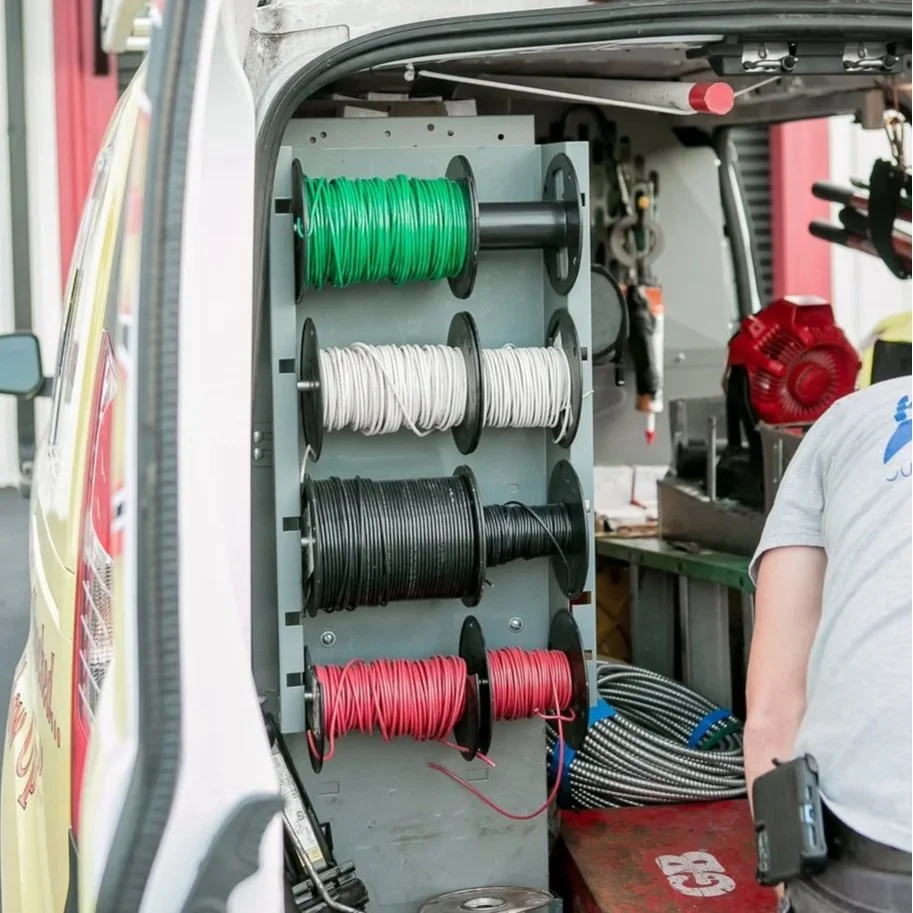
Kennedy Electric technician organizing wiring supplies inside service van, highlighting professional upgrades and fire prevention for aging home electrical systems.
When Old Wiring Quietly Stops Being Enough
Many Florida homes were wired for a very different lifestyle than the one happening inside them today. Decades ago, houses did not support multiple televisions, gaming systems, home offices, high-efficiency HVAC systems, and a garage full of chargers running simultaneously. Wiring that once felt generous now runs near capacity every day, especially during long cooling seasons when air conditioning rarely gets a break.
Homeowners often assume that if the lights turn on, the wiring is fine. That assumption causes problems because electrical systems do not fail all at once. Insulation dries out, connections loosen, and resistance increases gradually. Heat builds at weak points long before a breaker trips. Over time, that heat damages surrounding materials and increases fire risk inside walls where no one can see it. Ignoring outdated wiring often feels harmless until a faint burning smell or scorch mark finally forces attention.
Why Breakers Tripping Is A Warning, Not An Inconvenience
A breaker that trips occasionally is often treated like a nuisance rather than a message. Many homeowners reset it without a second thought, especially if power comes right back on. That habit overlooks the role breakers play. Breakers trip because a circuit is overloaded, shorted, or drawing unsafe current. Resetting without investigation allows the same stress to continue.
In Florida, breakers trip more often during the summer, when electrical demand spikes. Air conditioners, pool pumps, and dehumidifiers run longer hours, sometimes on circuits never designed for that load. Repeated tripping creates heat at the panel and at outlets downstream. Over time, that heat degrades insulation and weakens connections. Electrical fires often start at these stressed points rather than at the panel itself, which makes early warning signs easy to miss.
The Extension Cord Trap Everyone Falls Into
Extension cords feel harmless because they solve problems quickly. One outlet becomes three, a room gains flexibility, and nothing appears wrong at first. Many homeowners rely on extension cords long-term, especially in older homes with fewer outlets. Florida humidity and heat make that habit riskier than most people realize.
Extension cords are designed for temporary use, not constant loads. Running appliances, space heaters, or electronics through cords for months or years increases resistance and heat buildup. Cords tucked under rugs or furniture trap that heat even more. Over time, insulation breaks down, increasing the likelihood of sparks. Electrical fires linked to extension cords rarely come from dramatic misuse. They come from cords quietly doing too much for too long.
Why Electrical Panels Age Faster In Florida Homes
Electrical panels are often installed in harsh environments in many Florida houses. Garages, exterior walls, and utility closets expose panels to heat, moisture, and corrosion. Homeowners often assume panels last forever if breakers still reset properly. That belief ignores how internal components degrade over time.
Corrosion on bus bars, loose breaker connections, and weakened contacts all increase resistance. Resistance creates heat. Heat damages insulation and increases fire risk. Panels installed decades ago may also lack the capacity to meet modern electrical demand, forcing circuits to operate closer to their limits every day. Without inspection, panels quietly become one of the most dangerous fire risks in the home, even when they appear perfectly functional from the outside.
What GFCI And AFCI Protection Really Prevents
Many homeowners recognize GFCI outlets by their reset buttons but misunderstand their purpose. GFCI protection reduces the risk of shock near water sources, such as kitchens, bathrooms, garages, and outdoor areas. AFCI protection detects dangerous arcing that can ignite fires inside walls. Both play critical roles in fire prevention.
Older Florida homes often lack AFCI protection entirely and may have limited GFCI coverage. Homeowners assume that replacing outlets alone solves the problem. Protection must exist at the correct points in the circuit to work properly. Without it, arc faults caused by damaged wiring or loose connections can continue unnoticed. Over time, those arcs generate heat and sparks that ignite surrounding materials. Proper protection addresses risks homeowners never see until damage is done.
Why DIY Electrical Fixes Create Long-Term Fire Risk
DIY electrical work feels approachable because it looks simple on the surface. Swap an outlet, add a light, replace a switch. Many homeowners believe careful work and online tutorials eliminate risk. The danger lies in what cannot be seen. Improper wire connections, incorrect wire sizes, and overloaded circuits create hidden stress points.
Florida homes amplify these risks because heat accelerates insulation breakdown. A loose connection that may last years in cooler climates may fail sooner. DIY work often skips load calculations and safety-related code requirements. Over time, those shortcuts increase fire risk inside walls and junction boxes where problems grow silently.
How Overloaded Circuits Become Fire Starters
Overloaded circuits rarely announce themselves loudly. Lights dim slightly, breakers feel warm, and outlets run hotter than usual. Homeowners often accept these signs as normal, especially in older houses. In reality, circuits carrying more load than designed generate excess heat along their entire length.
Florida households with added appliances, home offices, and outdoor equipment often exceed original circuit capacity. That strain damages insulation and weakens connections. Fires linked to overloaded circuits usually start at outlets, switches, or junction points where resistance concentrates. Without evaluation, homeowners keep adding devices and increasing risk without realizing it.
Appliances That Quietly Stress Electrical Systems
Large appliances draw significant current and demand proper circuits. Refrigerators, dryers, water heaters, and HVAC systems all require specific wiring and protection. Homeowners sometimes replace appliances without considering electrical compatibility. Newer units often draw more power than older models.
Improper connections or shared circuits force wiring to handle loads it was never designed for. Over time, heat builds up at terminals and inside walls. Florida humidity worsens corrosion at appliance connections, further increasing resistance. Appliance-related electrical fires often begin behind walls or inside cabinets, where warning signs go unnoticed until smoke appears.
Why Lighting Choices Matter More Than People Think
Lighting upgrades feel cosmetic, but they affect electrical load and heat. Recessed lighting, high-wattage fixtures, and improperly rated bulbs generate more heat than expected. Homeowners often install fixtures without checking housing ratings or clearance requirements.
Heat buildup around lighting fixtures damages insulation and nearby materials over time. In Florida attics, already exposed to extreme temperatures, lightning compounds the risk. Improper lighting installation remains a common cause of electrical fires because it blends into everyday home improvement without obvious danger.
The Role Of Regular Electrical Inspections
Many homeowners schedule inspections only during real estate transactions. Electrical systems deserve attention long before that point. Inspections identify loose connections, outdated components, overloaded circuits, and moisture damage before fires occur.
Florida conditions accelerate wear, making regular evaluations more important than in milder climates. Inspections provide a snapshot of how systems perform in real-world conditions rather than ideal conditions. Identifying problems early prevents expensive repairs and dangerous outcomes later.
How Professional Electricians Spot Hidden Fire Risks
Electricians like Kennedy Electric approach fire prevention by looking beyond surface symptoms. They evaluate load distribution, panel condition, grounding integrity, and connection quality. That perspective reveals risks homeowners rarely recognize.
Professional assessment focuses on how systems behave under stress, not just on whether power flows. Identifying heat patterns, corrosion, and aging materials prevents fires caused by slow deterioration rather than sudden failure. Experience matters because electrical fires often originate from subtle warning signs rather than obvious defects.
FAQs – Generator Services in Florida
Electrical fires in Florida homes often start from outdated wiring, overloaded circuits, loose connections, and aging electrical panels. Heat and humidity accelerate wear, making small issues grow into serious risks over time.
Warm outlets, discoloration, buzzing sounds, or burning smells signal potential fire risk. These signs indicate resistance or loose connections that generate heat and should be evaluated promptly.
Panels can function while still posing a fire risk. Corrosion, loose breakers, and limited capacity increase heat and stress even when breakers reset normally.
Extension cords are intended for temporary use only. Long-term use increases heat buildup and insulation damage, especially in Florida's hot, humid conditions.
Electrical inspections are recommended every few years or after major appliance additions. Florida's heat and humidity justify more frequent evaluations to catch early warning signs.
