

5 Questions To Ask Before Hiring An Electrician In Florida
How do I even know if I can trust the electrician I just found online? Why does every website say they’re licensed and experienced, but I still feel like I’m about to make an expensive mistake?
You stare at a flickering light, a warm outlet, or a breaker that keeps tripping and realize you have to call someone. That moment usually comes with a mix of frustration and hesitation. Electrical work is not like hiring someone to mow the lawn. If you choose wrong, you could end up with higher bills, repeat repairs, failed inspections, or worse, hidden safety risks inside your walls. Knowing the right questions to ask before hiring an electrician in Florida protects your home and your peace of mind.
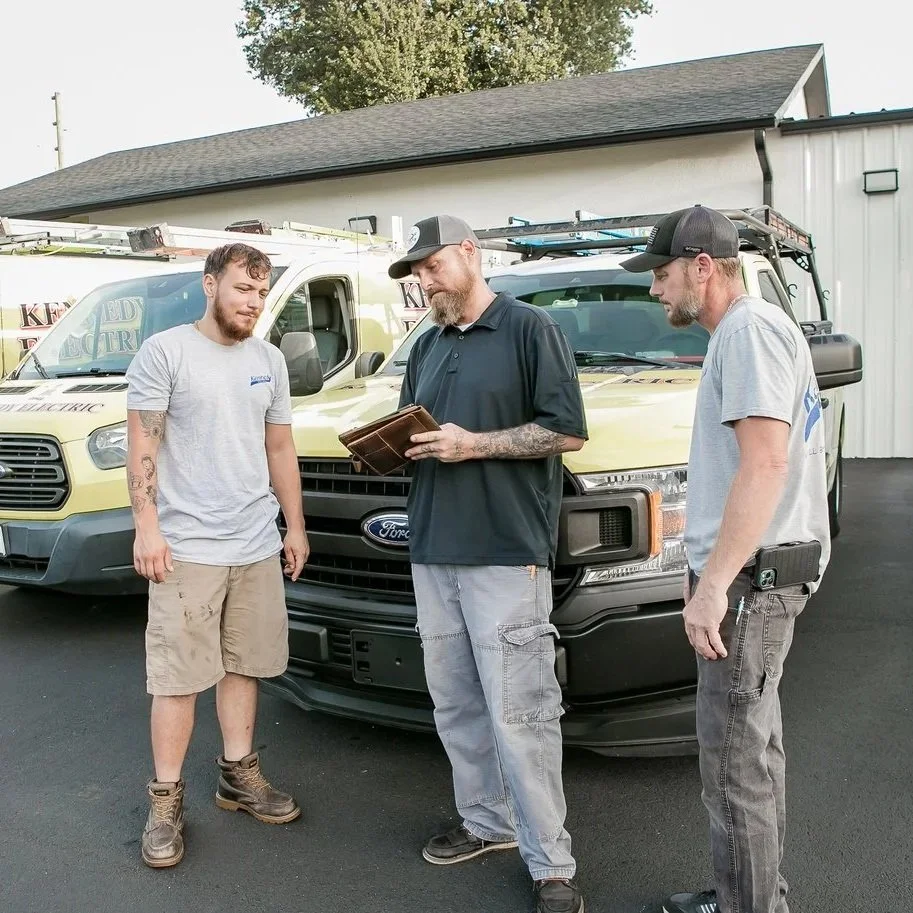
Kennedy Electric team discussing project beside service truck representing professional consultation licensing insurance and electrical planning process.
Are You Properly Licensed And Insured In Florida?
One of the first questions to ask before hiring an electrician in Florida is about licensing and insurance. Florida requires electricians to hold appropriate state or local licenses depending on the scope of work. Licensing is not just paperwork. It reflects training, testing, and knowledge of current codes.
Many homeowners assume that if someone shows up in a branded truck, they must be legitimate. That assumption leads to problems. Unlicensed work may cost less upfront, but it can create serious issues later. Insurance companies may deny claims related to unpermitted or improperly completed electrical work. Home inspections during a home sale can reveal noncompliant installations that must be corrected at your expense.
Insurance matters just as much as licensing. Liability insurance protects your property if accidental damage occurs. Workers’ compensation coverage protects you from being financially responsible if a worker is injured on your property. Asking directly for proof is not rude. It is responsible. A reputable electrician in Florida expects that question and can provide documentation without hesitation.
Have You Handled Projects Like Mine Before?
Electrical work is not one-size-fits-all. Installing a ceiling fan differs from upgrading a main service panel. Troubleshooting a flickering circuit differs from wiring a new addition. Asking about relevant experience gives insight into whether the electrician understands your specific situation.
Florida homes vary widely. Some neighborhoods have older properties with aging wiring. Others feature newer construction with advanced surge protection and smart panels. Coastal properties face additional challenges from humidity and salt exposure. Experience with local conditions matters.
A common homeowner mistake is hiring based solely on price. The lowest bid can look appealing, especially if you are already dealing with an unexpected repair. However, inexperience often leads to shortcuts. Those shortcuts may pass casual inspection but fail over time. Asking about similar completed projects reveals whether the electrician has faced and solved problems like yours before. That context helps you feel confident rather than guessing.
What Permits And Inspections Are Required For This Job?
Many homeowners type “Do I need a permit for electrical work in Florida?” after receiving conflicting advice. Permits exist to verify that work meets safety standards. Certain projects, such as panel upgrades, new circuits, and major rewiring, typically require permits and inspections.
Some contractors downplay permits, suggesting they are unnecessary or only create delays. That approach may seem convenient, but it transfers risk to you. Unpermitted work can complicate insurance claims and home sales. If an inspector discovers noncompliant work during a future renovation, you may be required to open walls and correct issues.
A responsible electrician explains which permits apply and why. They also handle the process or guide you through it clearly. Understanding the permit requirement upfront avoids surprises later. Proper documentation shows that the work met code at the time it was completed, which protects your investment long term.
How Will You Diagnose The Problem Before Recommending A Fix?
When something goes wrong, such as a breaker that keeps tripping or outlets that feel warm, homeowners often want a fast solution. However, effective electrical repair starts with diagnosis. Asking how the electrician plans to evaluate the issue reveals their approach.
Some contractors jump straight to replacing parts. Replacing a breaker without checking load calculations or connection integrity may not address the real cause. A breaker trips for a reason. Replacing an outlet without inspecting the wiring behind it can leave hidden damage undetected.
A thorough electrician explains their diagnostic process. That process might include load testing, visual inspection of connections, and verification of wire sizing. It might involve checking panel conditions or looking for signs of corrosion. Diagnosis takes time, but it prevents recurring problems. Understanding that approach reduces frustration when the repair involves more than a simple component swap.
What Will The Total Cost Include, and What Could Change It?
Money is often the unspoken tension in any home repair. Electrical work can vary significantly in cost depending on complexity, materials, and accessibility. Asking detailed questions about pricing helps avoid misunderstandings.
Clear estimates should outline labor, materials, permit fees if applicable, and potential variables. For example, upgrading a panel might reveal additional issues such as outdated grounding or damaged feeders. An experienced electrician will explain possible contingencies rather than surprise you mid-project.
Homeowners sometimes focus only on the bottom line number. However, understanding what that number covers is more important. A slightly higher estimate that includes thorough diagnostics, proper permitting, and quality components often provides better long-term value than a lower quote that omits key elements. Transparency builds trust and reduces stress.
The Danger Of Choosing Based On Speed Alone
Many people searching for an electrician in Florida are dealing with an urgent issue. Power may be out in part of the home. An outlet may have sparked. In those moments, speed feels like the top priority. While responsiveness matters, choosing solely on who arrives fastest can backfire.
Electrical systems are interconnected. A rushed repair might restore power temporarily but overlook underlying causes. That oversight can lead to repeat failures. In some cases, quick fixes create new vulnerabilities, especially if connections are not properly torqued or wiring is not secured correctly.
Balancing urgency with careful evaluation produces better outcomes. A professional electrician explains what can be addressed immediately for safety and what may require more thorough follow-up. That clarity helps homeowners feel heard without sacrificing quality.
Understanding Florida-Specific Electrical Challenges
Florida presents unique electrical conditions. Frequent storms increase the importance of surge protection. High humidity can affect panel components and exterior connections. Air conditioning systems run heavily for much of the year, increasing overall electrical load.
Asking how an electrician accounts for these regional factors demonstrates whether they understand local demands. Surge protection at the panel level, proper sealing of exterior conduits, and balanced load distribution become more important in this climate.
Homeowners sometimes assume that national advice applies universally. However, wiring practices and common failure points differ by region. An electrician familiar with Florida homes recognizes patterns shaped by weather and construction trends. That familiarity leads to solutions tailored to local realities rather than generic fixes.
How Communication Reflects Professionalism
Clear communication is often overlooked when hiring an electrician in Florida. Homeowners want to know what will happen, how long it will take, and what disruptions to expect. Uncertainty increases stress, especially when power must be shut off during repairs.
An electrician who explains the process, answers questions directly, and sets realistic expectations builds confidence. Vague responses or dismissive attitudes signal potential problems. You should feel comfortable asking follow-up questions without feeling rushed.
Communication also includes after-work support. Understanding warranty terms and what to do if issues arise later adds another layer of protection. Electrical work should not feel mysterious. A professional approach removes confusion and replaces it with clear next steps.
Why These Questions Protect More Than Your Wallet
Asking the right questions before hiring an electrician in Florida does more than control costs. It protects your home’s structural integrity and your family’s safety. Electrical systems operate silently behind walls. When installed or repaired improperly, problems may remain hidden for years.
Fires caused by electrical faults often start in concealed spaces. Overheated wires, loose connections, or improperly sized breakers can smolder unnoticed. Carefully choosing an electrician reduces those risks. Preventive attention today avoids emergency repairs tomorrow.
At Kennedy Electric, we encourage homeowners to ask tough questions. An informed client makes better decisions. Electrical work should leave you feeling secure, not uncertain. Confidence comes from understanding who is working on your home and how they approach safety, compliance, and long-term performance.
FAQs
Electricians in Florida must hold either a state-certified license or a registered local license, depending on the scope and location of the work. Licensing confirms that the electrician has met training and testing requirements. Asking to see proof of a valid license helps verify qualifications and protects you from unlicensed work.
Not every minor repair requires a permit, but many significant projects, such as panel upgrades, new circuits, or major rewiring, do. Permit requirements vary by municipality and job scope. Confirming permit needs with your electrician prevents complications during inspections or future home sales.
Experience often shows in how they discuss local challenges such as humidity, storm-related surges, and high air conditioning loads. An electrician familiar with Florida conditions can explain how those factors influence wiring choices and protective measures. Asking about similar local projects provides additional clarity.
A lower estimate may not include permits, high-quality materials, or thorough diagnostics. Comparing what each quote covers is more important than comparing price alone. Long-term reliability and safety often justify a slightly higher upfront investment.
Liability insurance protects your property if accidental damage occurs during work, and workers’ compensation coverage protects you if someone is injured on your property. Verifying coverage reduces financial risk and reflects professional responsibility.
